
Modern agriculture is becoming increasingly automated, but technology cannot replace the knowledge, dedication, and experience of a skilled grower. Inspired by a conversation with an Australian farmer, this article explores why crop quality remains at the heart of successful farming. It discusses the importance of daily crop observation, practical growing experience, greenhouse technology, consistent product quality, and long-term learning. Ultimately, a farmer's reputation is built not by the size of the farm or the sophistication of its equipment, but by the quality of the crops produced.
A conversation that stayed with me
I once jokingly suggested that an Australian farmer who had already purchased Chinese agricultural machinery could use his videos to try selling similar machines locally. He replied, “I’m a farmer, the plants need me, I’m so dedicated to growing that nothing else matters.” His answer captured something worth remembering in an era when agriculture is increasingly described through automation, scale and technology: the farmer’s ultimate product is the crop.
Customers buy produce, not equipment
A consumer does not automatically pay more for a tomato because it came from an expensive glasshouse. They care about freshness, flavor, appearance, food safety and reliability. A grower’s hectares, pumps, tractors and control systems represent production capacity; the harvested fruit or vegetables represent market value. Farming resembles manufacturing in this respect: the quality of the final product matters more to the customer than the equipment inventory.
Attention to plants cannot be outsourced to a fixed schedule
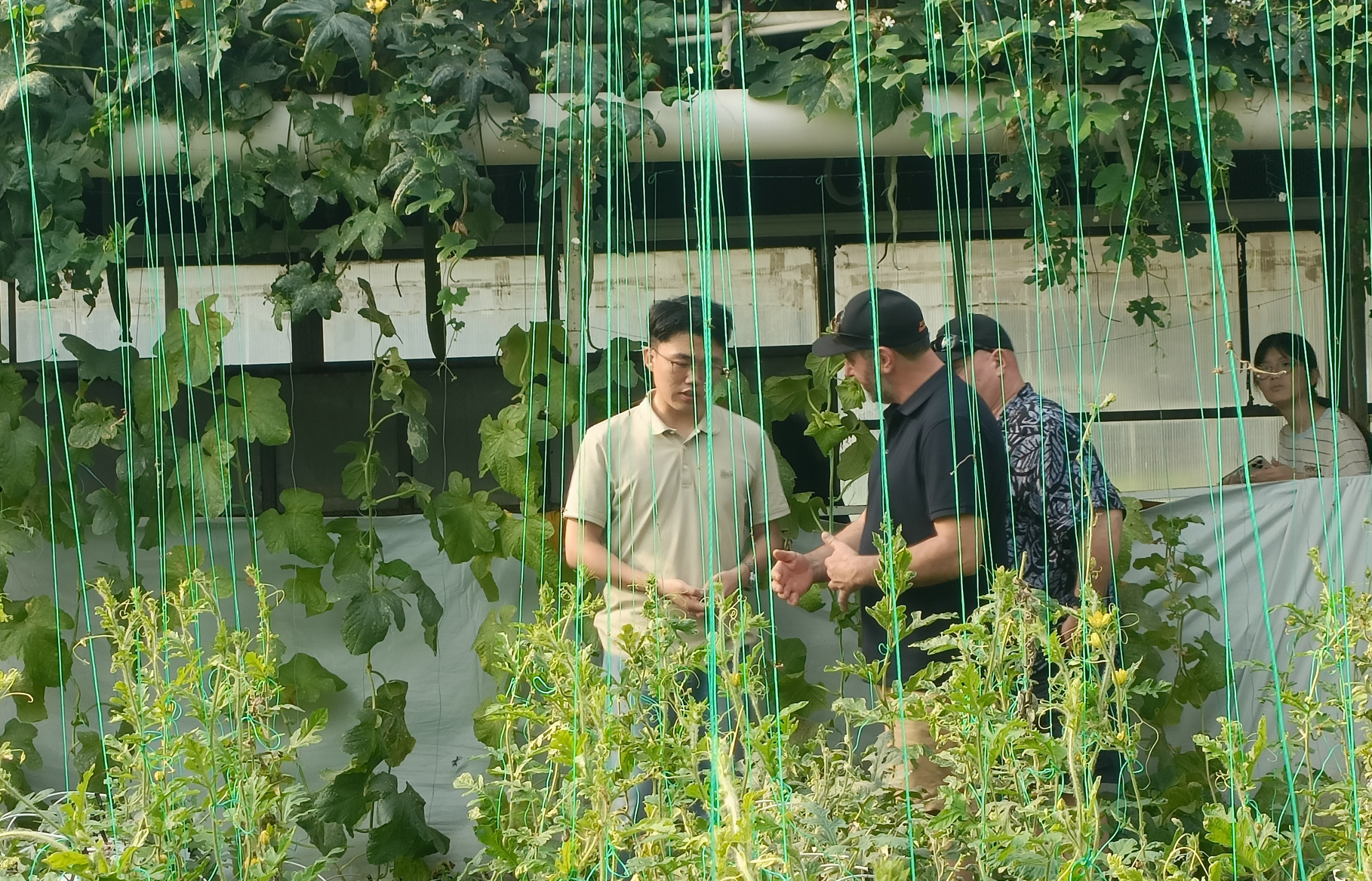
Plants change every day and across every growth stage. Weather, light, roots, flowers and fruit load all influence water and nutrient needs. Skilled growers pay attention to leaf color, root condition, canopy balance, uniformity, flowering, set, pest pressure and signs of stress. What appears to be a nutrient shortage might instead involve root damage, pH or environmental conditions. The value of experience is not the ability to make a quick guess, but to observe carefully, distinguish possible causes and test the response.
Automation should release time for agronomy
Irrigation controllers can open valves; fertigation equipment can dose a recipe; sensors can record temperature, humidity, light and EC. None of these systems independently understands the whole crop. Technology works best when it performs repetitive operations reliably and alerts the grower to changes that merit attention. The grower then has more time to walk the crop, analyze records and improve decisions. Automation is a support for professional attention, not a replacement for it.
Knowledge becomes expertise through seasons
Training manuals provide useful ranges for climate and nutrition, but conditions in a real greenhouse rarely match a textbook every day. Growers learn by comparing seasons, varieties, irrigation schedules and market outcomes. A yellow leaf is not a diagnosis. Wilting does not always mean a lack of water. Poor fruit set can have multiple interacting causes. The strongest production teams keep records, review mistakes without defensiveness and turn practical learning into repeatable routines.
Consistent quality builds a market
For commercial buyers, a single excellent harvest is less valuable than a dependable supply of produce that meets grading, safety, taste and handling standards. Pack-out percentage, uniformity, maturity, postharvest care and timing all help build buyer confidence. Reputation is earned through repeated deliveries, not by a logo or a claim about advanced farming. Crop quality is a farm’s most credible form of marketing.
Focus includes market awareness and delegation
Dedication to growing does not mean ignoring consumers or trying to do every job personally. A professional grower needs to know which sizes, varieties and characteristics customers actually buy. As operations expand, competent staff should take responsibility for maintenance, packing, procurement, sales and finance. The farm leader should concentrate on the decisions where their expertise adds the greatest value and build systems that make quality less dependent on any one person.
Long-term thinking respects biology
A greenhouse can be installed on a schedule; plants still develop according to biological processes. Not every season will deliver an immediate financial success. Some cycles teach the farm which variety, crop density, environmental strategy or irrigation pattern works best locally. That learning is a real asset when it is recorded and used. Great farming takes patience, discipline and the willingness to improve one crop cycle at a time.
Conclusion
The farmer’s proudest achievement may not be the number of greenhouses owned but the ability to harvest healthy, consistent produce that buyers trust. Engineering creates the space, technology improves control, and experienced people turn both into quality crops. As my Australian contact said, the plants need the farmer. That remains a powerful description of professional agriculture.