
Choosing a soilless system? Consider the crop, people, and operational demands. Evaluate equipment drawings, root management, irrigation, oxygen supply, cleaning, and emergency response.
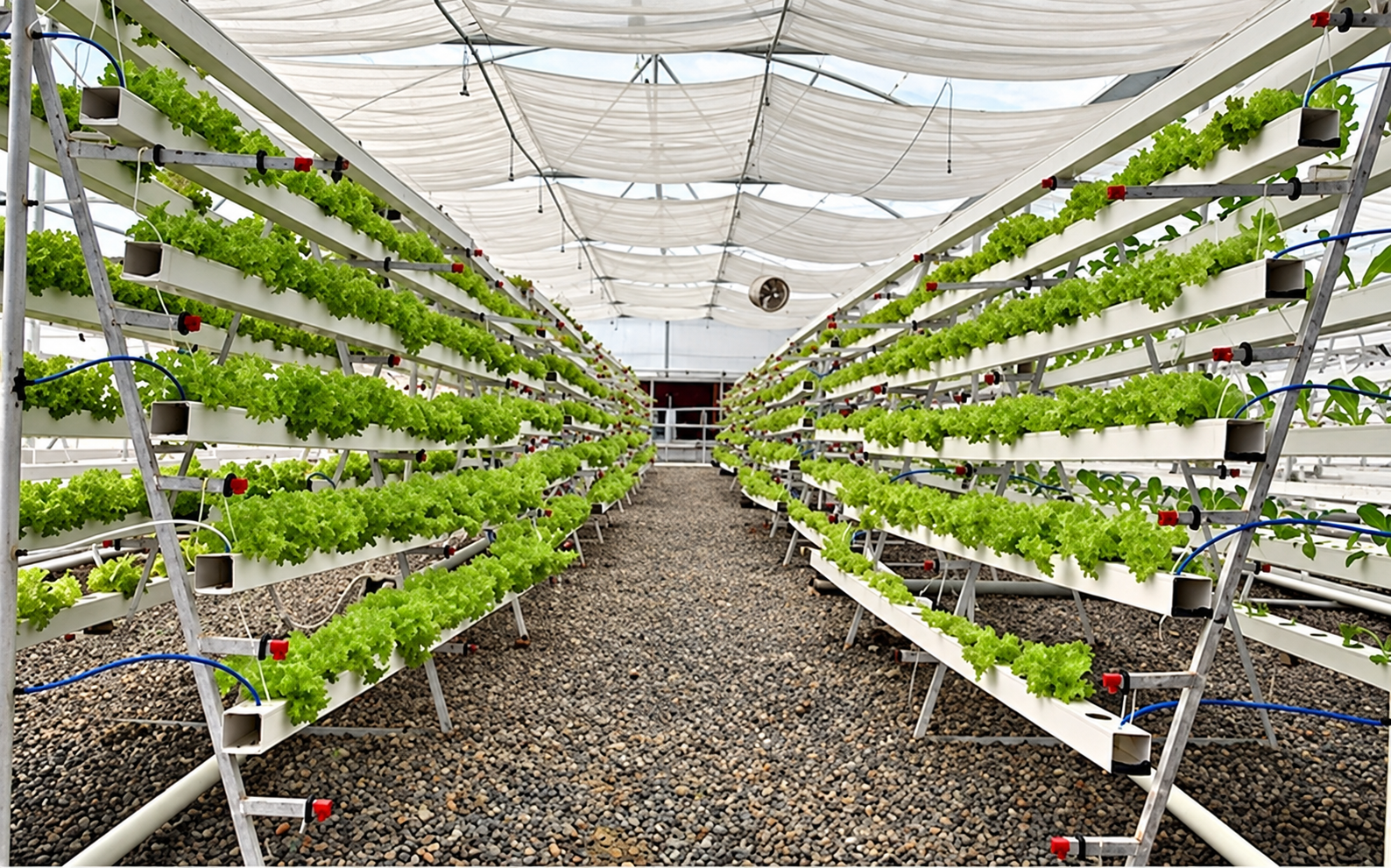
Choosing a soilless system is an operating decision with engineering consequences. Equipment drawings explain where channels, tanks or slabs will sit, but the more important question is how the farm will manage roots throughout a crop cycle. Different systems create different demands for irrigation, oxygen supply, cleaning and emergency response. A commercial comparison should start with the intended crop and the people who will manage it. Buyers can then evaluate whether the system supports the production plan, whether its failure modes are manageable and whether local service arrangements match the level of operational dependence being introduced.
Begin with plant size and crop duration
A compact leafy crop and a long cycle fruiting crop place different demands on space, support and root management. Consider the mature plant rather than the transplant shown in a promotional photograph. Root volume, canopy size, harvest method and the duration of occupation all matter. A system must remain accessible when roots have developed and the crop reaches full size. Discuss how plants enter and leave the growing area and how channels, containers or slabs are handled between cycles. Compatibility with a crop category is only the beginning; the practical question is whether a specific configuration supports the variety, density and working method proposed for the site.
Understand what each system asks from management
In nutrient film technique, roots receive a shallow moving nutrient solution through channels. Deep water arrangements maintain a larger body of solution around supported plants, with oxygen management requiring deliberate attention. Substrate systems place roots in a growing medium and commonly deliver nutrient solution through drip irrigation. These descriptions identify basic differences, not a universal ranking. Channel geometry, tank arrangement, aeration, drainage and control details can materially change how an installation behaves. Ask the supplier to explain the daily operating routine for the proposed design. A system becomes easier to assess when a grower can describe how water, nutrients and oxygen reach every plant.
Examine the available operating buffer
Some configurations give roots very little protection when delivery stops. Others retain more water but still require attention to oxygen, temperature and nutrient conditions. The relevant question is what happens during an interruption at the most demanding point of the crop cycle. Review loss of power, a stopped pump, a blocked line and an empty tank as separate events. Identify which are detected automatically and how staff respond. Avoid assuming that a larger reservoir or a substrate eliminates risk. Ask for a practical explanation of the time available to intervene under the site's expected conditions, including the limits of any estimate.
Assess water quality and recirculation together
A recirculating layout returns drainage or nutrient solution for reuse, but this does not make the solution chemically constant. Plants take up water and individual nutrients at different rates, and source water continues to introduce dissolved constituents. The farm therefore needs a monitoring and replenishment strategy appropriate to its crop and water. Electrical conductivity and pH are useful operating measurements, yet they do not identify every nutrient or contaminant. Specify sampling points and access for laboratory analysis. Where drainage is reused, discuss how cleaning, treatment and separation of production areas will be managed rather than treating a return pipe as the complete reuse strategy.
Put cleaning into the layout review
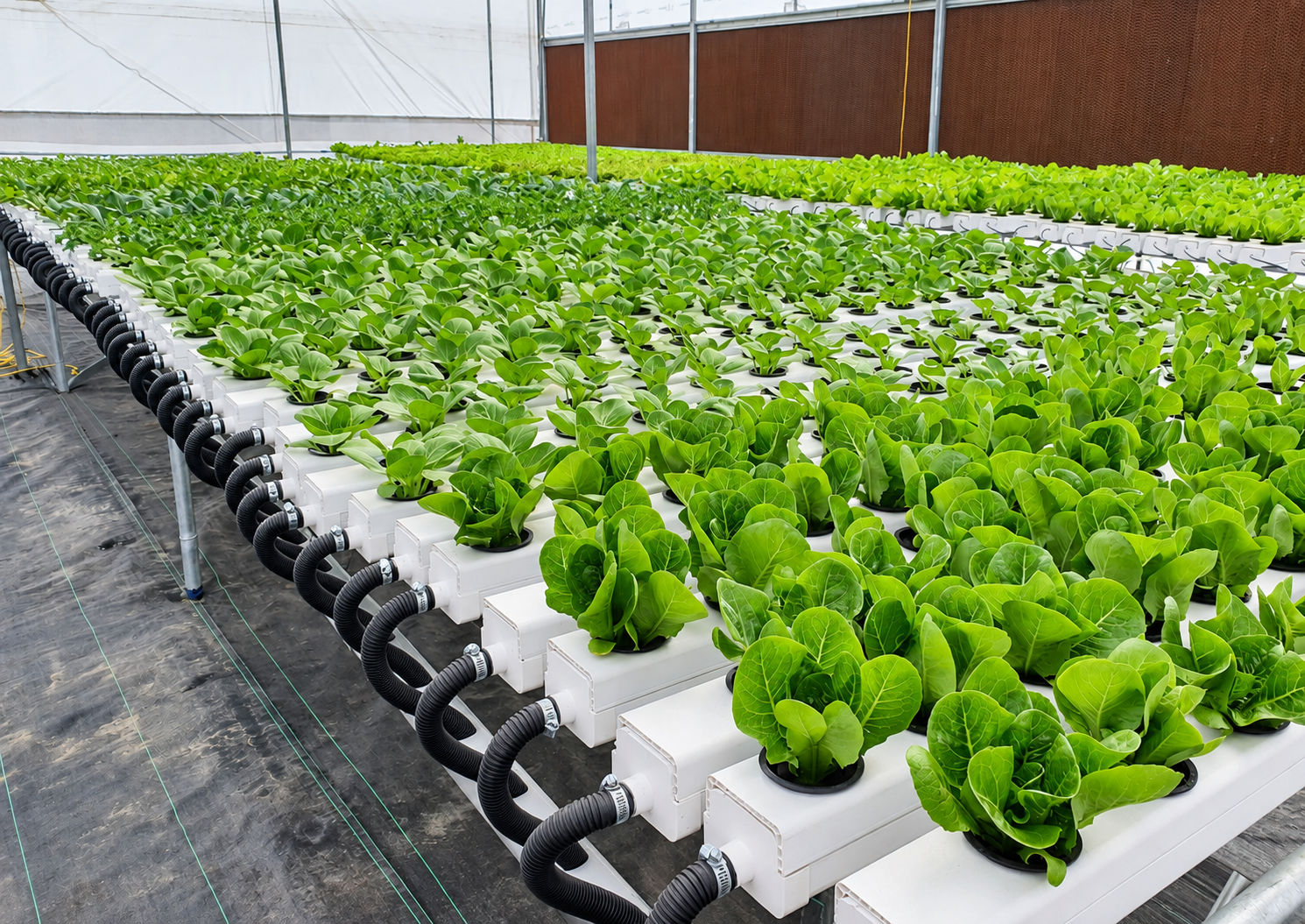
Equipment that is difficult to empty or reach is difficult to maintain consistently. Inspect channel ends, tank corners, return lines, filters and areas beneath growing benches. Ask how roots and residues are removed and how staff confirm that the system is ready for another crop. The appropriate cleaning method depends on materials and the farm's hygiene programme, so avoid choosing chemicals from a generic equipment checklist. Provide access, drainage and suitable work space first. For contractors, this means checking maintenance clearances before installations are fixed in place. For growers, it means allocating real time between crops rather than relying on an unrealistically short turnaround assumption.
Compare labour across the entire cycle
An installation can simplify one activity while adding work elsewhere. A compact layout may increase planting capacity but make scouting or harvesting more awkward. A reusable channel may require handling and washing that were absent from the first cost comparison. List the main tasks from plant arrival to crop removal, then identify the equipment and staff each requires. Include calibration, record keeping and fault response. Where local experience is limited, a small operating trial can expose practical issues before a large order is placed. Trials should have a clear question and evaluation period, rather than functioning only as a demonstration that plants can grow in the equipment.
Request a system level commissioning plan
Acceptance should show that the assembled installation operates as intended. Confirm delivery and return paths, tank levels, sensor readings, pump controls and alarms. Check representative positions across the growing area instead of inspecting only the equipment room. Document the starting operating procedure and the responsibilities for later adjustment as the crop develops. A dealer or local service partner should understand the installed configuration, hold the relevant drawings and know which parts are critical to continuity. The value of local support becomes clearer when a grower asks who can diagnose a failure during a busy production period and what information that person will need.
For procurement discussions with AGRINOVIX, compare the proposed system against a defined crop and operating scenario. Bring water information, the intended production cycle, utility limitations and the skills available on the farm. Ask for the reasoning behind the configuration as well as the bill of materials. A suitable system is one that the team can operate reliably, clean thoroughly and adapt within its intended design. The most useful choice is therefore supported by evidence about daily management and foreseeable problems, not simply by the number of planting positions that can fit inside a greenhouse drawing.