
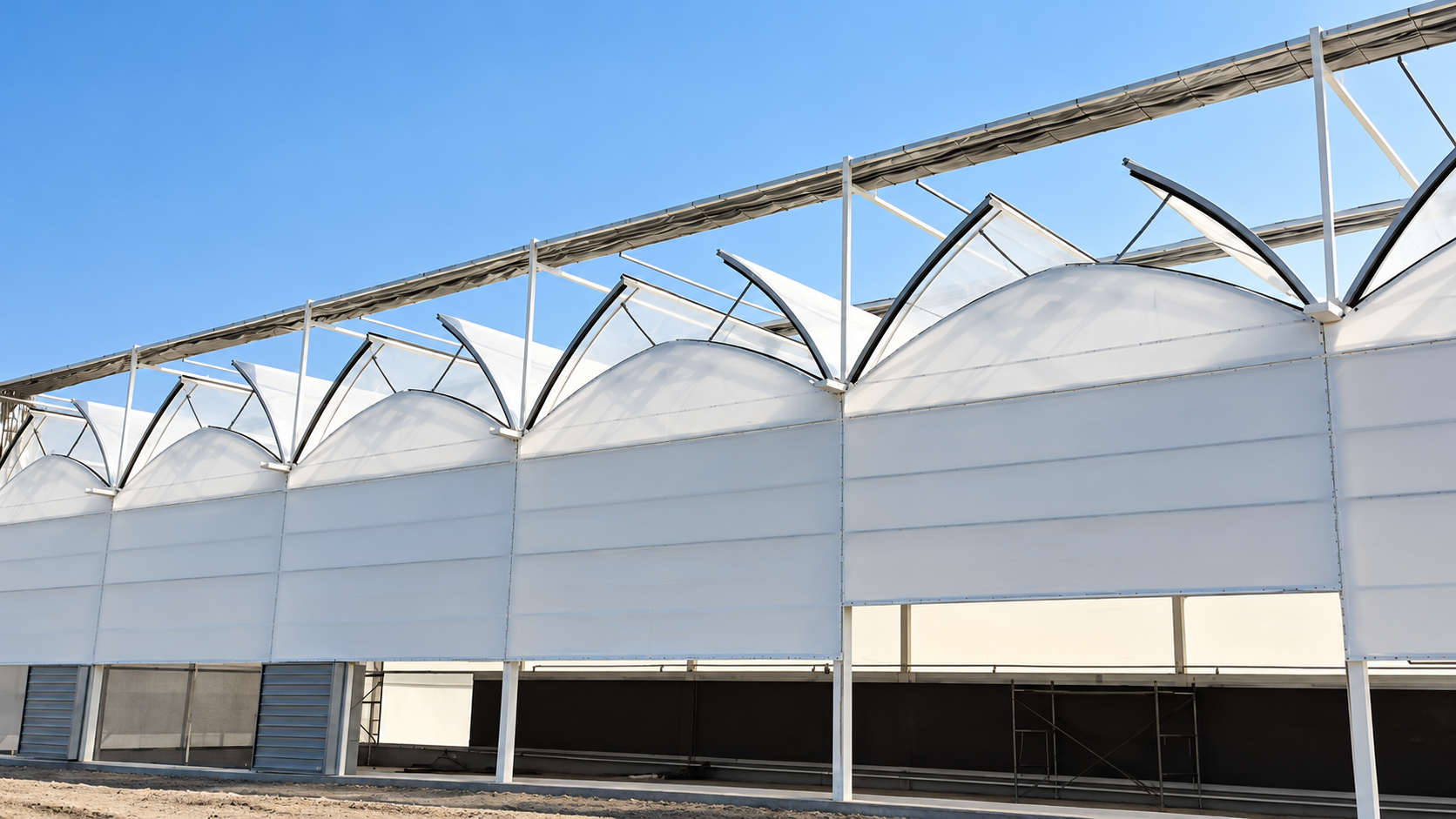
Design greenhouse ventilation around local weather, the complete air pathway, insect screens and the mature crop, then verify performance through coordinated controls, maintenance and measurements.
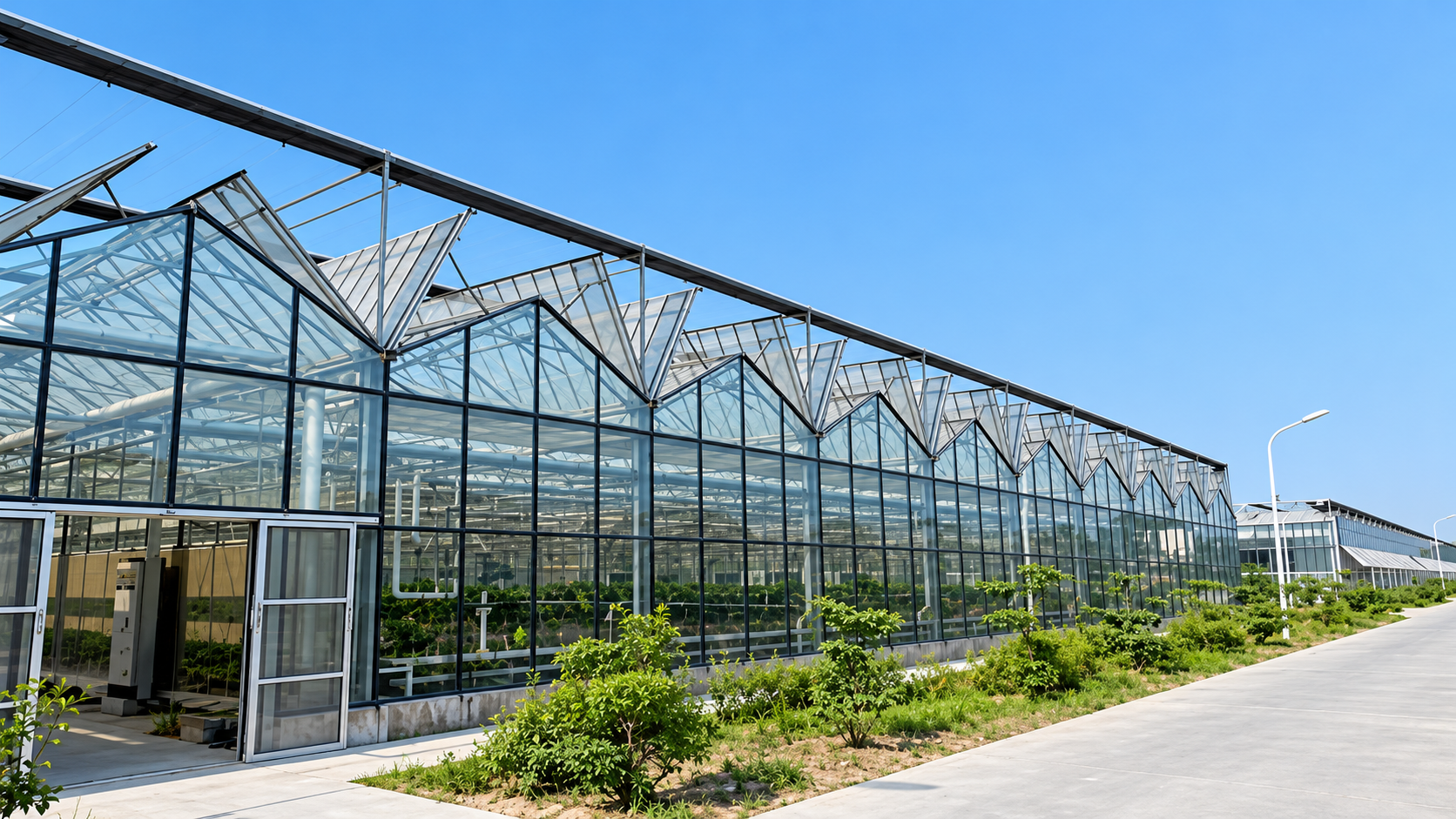
Ventilation is a pathway for exchanging greenhouse air with outside air. Its performance depends on more than the presence of roof vents or a bank of fans. The incoming air must reach the growing space, move through a changing crop and leave through a suitable outlet. Outside conditions also define what air exchange can achieve. Before choosing equipment, describe the weather periods that challenge the farm and the crop conditions that matter during those periods. A sound design makes its operating limits explicit and coordinates ventilation with shading, heating, screens and the other systems that influence the greenhouse environment.
Begin with the outside conditions
Exchanging air can remove accumulated heat and moisture when the outside air offers the necessary capacity, but it does not create an unlimited source of cooling. A hot outside environment constrains the result, and a humid climate changes the moisture balance. Review the difficult combinations rather than selecting equipment only for a typical afternoon. Include local wind conditions and how nearby structures may influence airflow. The design discussion should distinguish the conditions the system is expected to maintain from situations in which the grower may need a different operating strategy. This helps buyers compare proposals without mistaking a nominal ventilation capacity for a guaranteed crop environment.
Trace the complete air route
On the drawing, identify where air enters, which spaces it crosses and where it exits. Look for restrictions and potential short paths that allow air to leave without effectively serving the crop. In a fan ventilated greenhouse, intake area and the resistance of installed components affect the operating point. In a naturally ventilated greenhouse, openings, wind and buoyancy interact. Neither arrangement can be assessed through a single opening dimension. Ask the designer to explain the route under the main operating modes, including different vent positions and screen states. A simple airflow discussion often reveals missing coordination between structure, equipment and crop layout.
Include insect screens in the original design
Screens add resistance to airflow, with the effect depending on their characteristics, installation and cleanliness. They should therefore be evaluated alongside the ventilation concept rather than installed as a later accessory. Pest exclusion requirements and climate requirements need to be considered together. Ask for information about the proposed screen and the allowance made for its effect on airflow. Also review cleaning access and replacement arrangements. A screen that performs acceptably when clean may behave differently after dust accumulates. Growers need a maintenance routine that recognises this change, while contractors need sufficient access and a mounting arrangement that can be serviced without damaging adjacent components.
Evaluate the mature canopy
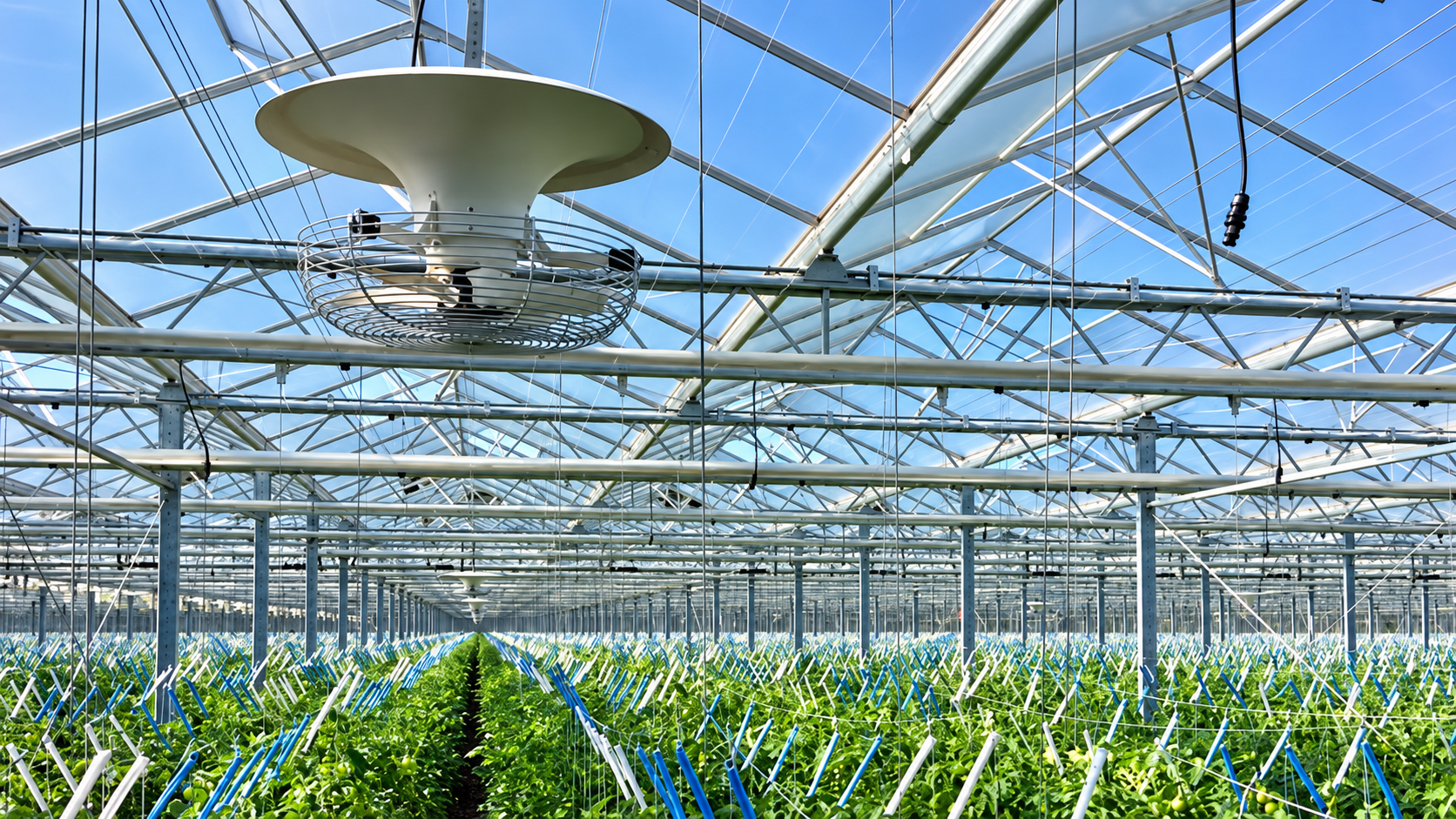
An empty greenhouse offers a misleadingly simple airflow environment. Growing plants change the resistance, moisture production and distribution of conditions inside the space. Tall crop rows, stored materials and temporary partitions can all affect movement. Review the proposed layout with the crop at its expected mature size. Where air circulation fans are used, explain their role in moving air within the greenhouse rather than assuming they replace the exchange of air with outside. Measurement positions should include representative crop areas and likely problem locations. A single sensor above a clear aisle may provide a useful control input while missing conditions experienced within dense foliage.
Coordinate controls and competing actions
Ventilation interacts with heating, shading, evaporative cooling and energy screens. A controller needs priorities and transition logic so that equipment operates coherently. Review what happens when a temperature request conflicts with a wind or rain protection setting. Discuss how the system recovers after the protection condition clears. Specify the information operators can see, the alarms they receive and the limits placed on manual overrides. Complicated control sequences are difficult to maintain when only one person understands them. A readable operating description should accompany the settings so the team can distinguish an intentional response from a sensor fault or a mechanical problem.
Make maintenance part of the performance plan
Fans, shutters, actuators, screens and sensors need inspection appropriate to their environment and manufacturer guidance. Dust, wear and sticking mechanisms can alter performance gradually. Provide access that allows the team to check these components safely and record the findings. Keep critical spare parts aligned with the installed equipment rather than maintaining a generic collection of incompatible items. Dealers can support this process by preserving model details and helping operators recognise early warning signs. The objective is to prevent a design that worked at handover from becoming unreliable because routine servicing was inconvenient, undocumented or assigned to nobody in particular.
Verify operation across the growing area
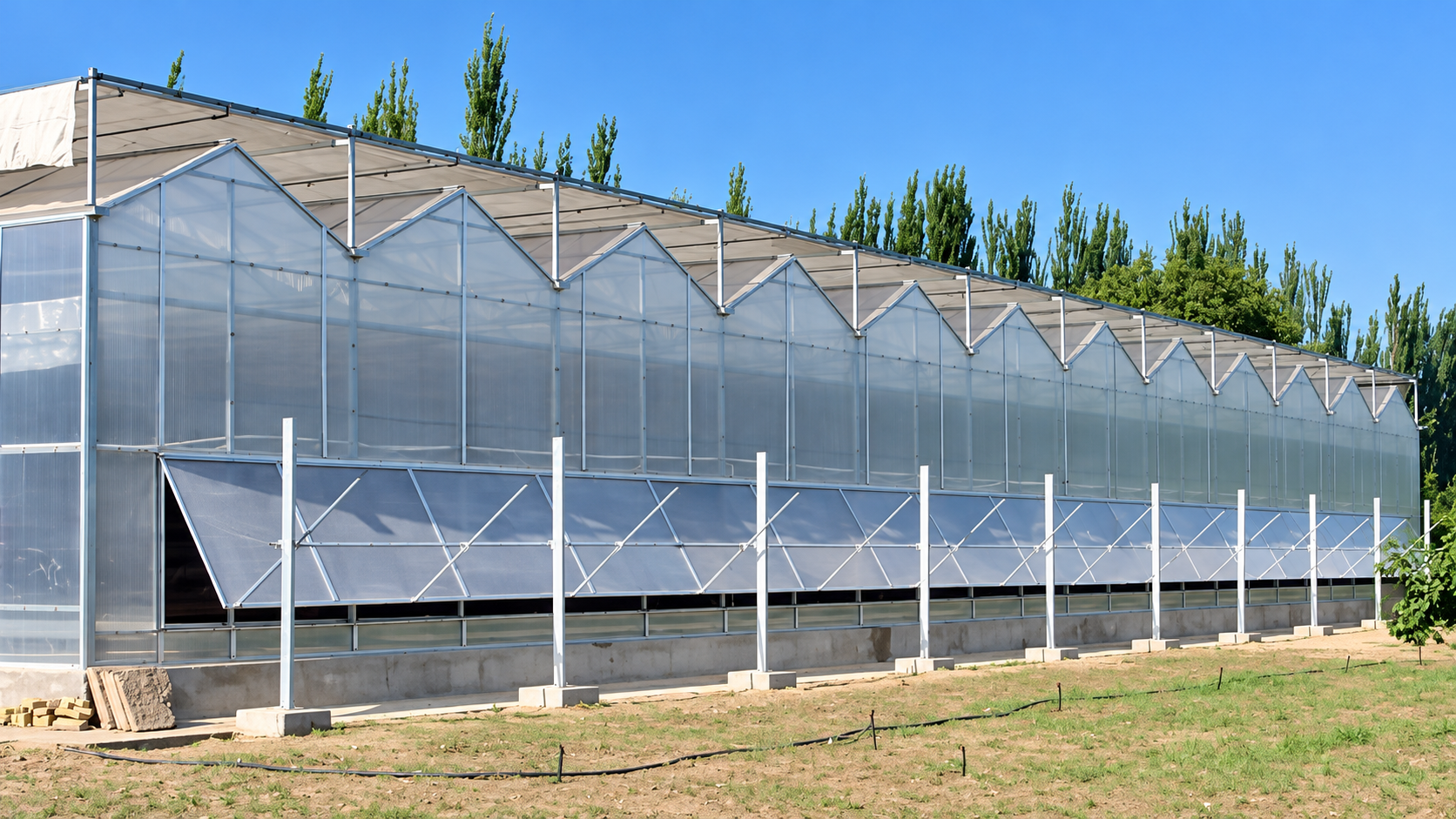
Commissioning should confirm opening movement, fan direction, intake operation, control responses and relevant alarms. Subsequent operating reviews should compare environmental conditions at several representative positions and record the weather and crop stage. A difference between locations can indicate an airflow issue, a sensor problem or a local obstruction; it deserves investigation rather than immediate changes to every setpoint. Use the findings to refine operation within the design limits. Where a contractual performance requirement exists, agree the measurement method and test conditions in advance so that buyer and supplier interpret the evidence consistently and understand what the result demonstrates.
For an AGRINOVIX ventilation discussion, bring the site climate, crop plan, pest exclusion needs and proposed greenhouse layout together. Ask how the selected system will behave in the difficult season and which maintenance tasks preserve its performance. Ventilation quality is best judged through the complete air pathway and its operating evidence. This gives growers a clearer basis for management, procurement teams a more meaningful comparison and builders a coordinated set of installation requirements. A greenhouse becomes easier to operate when the airflow concept is understandable, its limits are visible and the people responsible for maintaining it know what to inspect.
#AGRINOVIX #GreenhouseVentilation #ClimateControl #GreenhouseEngineering #CropEnvironment