
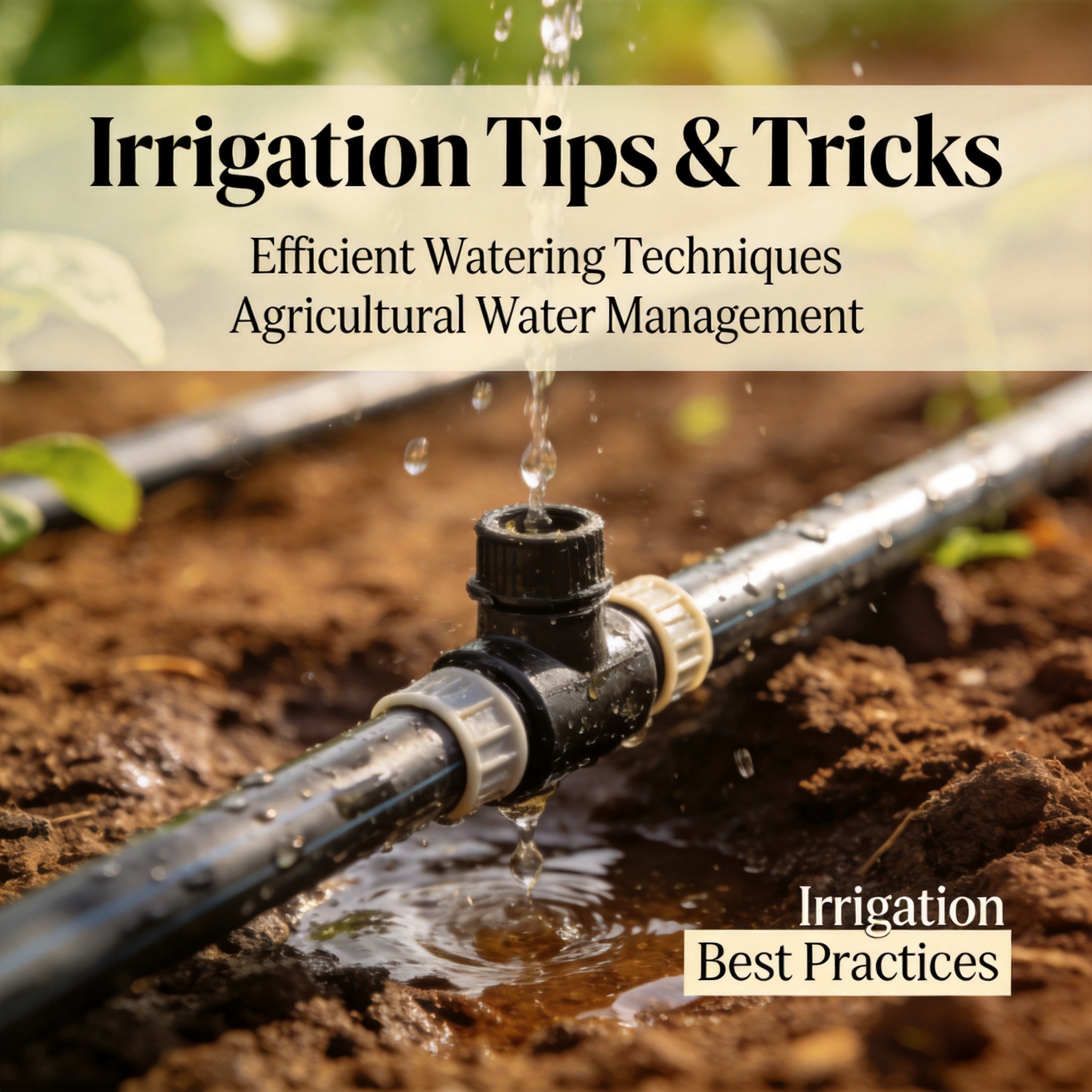
Improve greenhouse irrigation by checking water quality, delivery uniformity, root-zone conditions and drainage before changing the programme.
Good irrigation is a sequence of decisions about roots, rather than a timer setting that remains unchanged all season. The same volume can be useful on a bright day and excessive after a sudden fall in radiation. Wilting may reflect insufficient supply, but it can also involve damaged roots or an unsuitable root environment. Before increasing irrigation, the grower needs evidence about what reaches the crop and what happens afterwards. A practical programme connects water quality, equipment performance and daily plant observation.
Start with the water entering the farm
Obtain an analysis of the source water before selecting treatment and nutrition arrangements. Include the characteristics relevant to the crop, irrigation equipment and local conditions, rather than relying only on appearance. Water that looks clear can still create nutrient-management or clogging problems. Recheck when the source changes or seasonal variation is suspected. Keep sampling locations and results consistent enough to compare. Treatment should address identified needs and be reviewed with a competent specialist, not selected from a generic list of accessories.
Check delivery before changing the schedule
An irrigation programme assumes that each plant receives the intended supply. Inspect filters, pressure, leaks and emitters, then measure delivery at representative positions near and far from the supply point. Differences between rows may indicate a hydraulic or maintenance problem that extra runtime will not correct. Record the test conditions so that later measurements are comparable. Check drainage routes as well as incoming water. A system delivering unevenly can produce both wet and dry root zones within the same irrigation block.
Observe the root zone as well as the canopy
Leaves provide useful warnings, but they do not explain every cause. Examine representative roots and check soil or substrate moisture using methods suitable for that material. Sensor readings need context: placement, calibration, container size and root distribution all affect interpretation. Compare measurements with plant condition and manual observations. Do not assume that a dry surface means the entire root zone is dry. Similarly, repeated watering of an already saturated medium may worsen the conditions responsible for weak growth.
Adjust timing as demand changes
Crop size, radiation, temperature, humidity and the growing medium influence the frequency and size of irrigation events. Start from a crop-specific plan, then review it against actual demand. A sequence suitable for young plants may become inadequate as canopy and fruit load develop. Conversely, a programme carried over from sunny weather can deliver too much water during a cloudy period. Change one important variable at a time where practical, record the reason and allow enough observation to understand the response.
Use drainage and EC as information
In substrate production, drainage measurements can help explain the relationship between supply and root-zone conditions. Interpret them alongside incoming water, timing, crop stage and sampling method. Electrical conductivity indicates overall dissolved salts; it does not reveal the concentration of every nutrient. A single drainage percentage or EC target should not be presented as suitable for all crops and media. Investigate trends and obtain laboratory analysis when needed. Where drainage is collected for reuse, include hygiene and solution-management procedures in the operating plan.
Make maintenance part of the daily routine
A blocked emitter or drifting sensor can undermine a carefully designed programme. Assign responsibility for filter checks, tank inspection, leak reporting and instrument calibration. Follow equipment guidance for flushing and cleaning, and choose any treatment according to materials, water analysis and applicable requirements. Keep basic spare parts accessible and document the installed valve arrangement. Staff should be able to identify the affected irrigation block quickly when a fault occurs, instead of discovering the problem only after plants show visible stress.
Prepare for interrupted supply
Consider a stopped pump, low tank level, power failure and broken line as different events. Define which alarms identify each problem and who responds outside normal working hours. Backup arrangements should match the actual system and crop; the available intervention time cannot be assumed from a general brochure. Test response procedures safely and keep an operating record. After an incident, inspect the crop and root zone before automatically restarting the previous programme. Recovery decisions should reflect what happened, not simply whether power has returned.
For an irrigation review with AGRINOVIX, bring water-test results, the crop plan, growing-medium details and recent irrigation records. Ask for an explanation of distribution, monitoring and maintenance as well as pump capacity. Better irrigation usually starts with understanding an existing pattern before adding more equipment or more water. A programme becomes dependable when the team can measure delivery, recognise changing demand and make adjustments that are supported by the condition of the roots.