
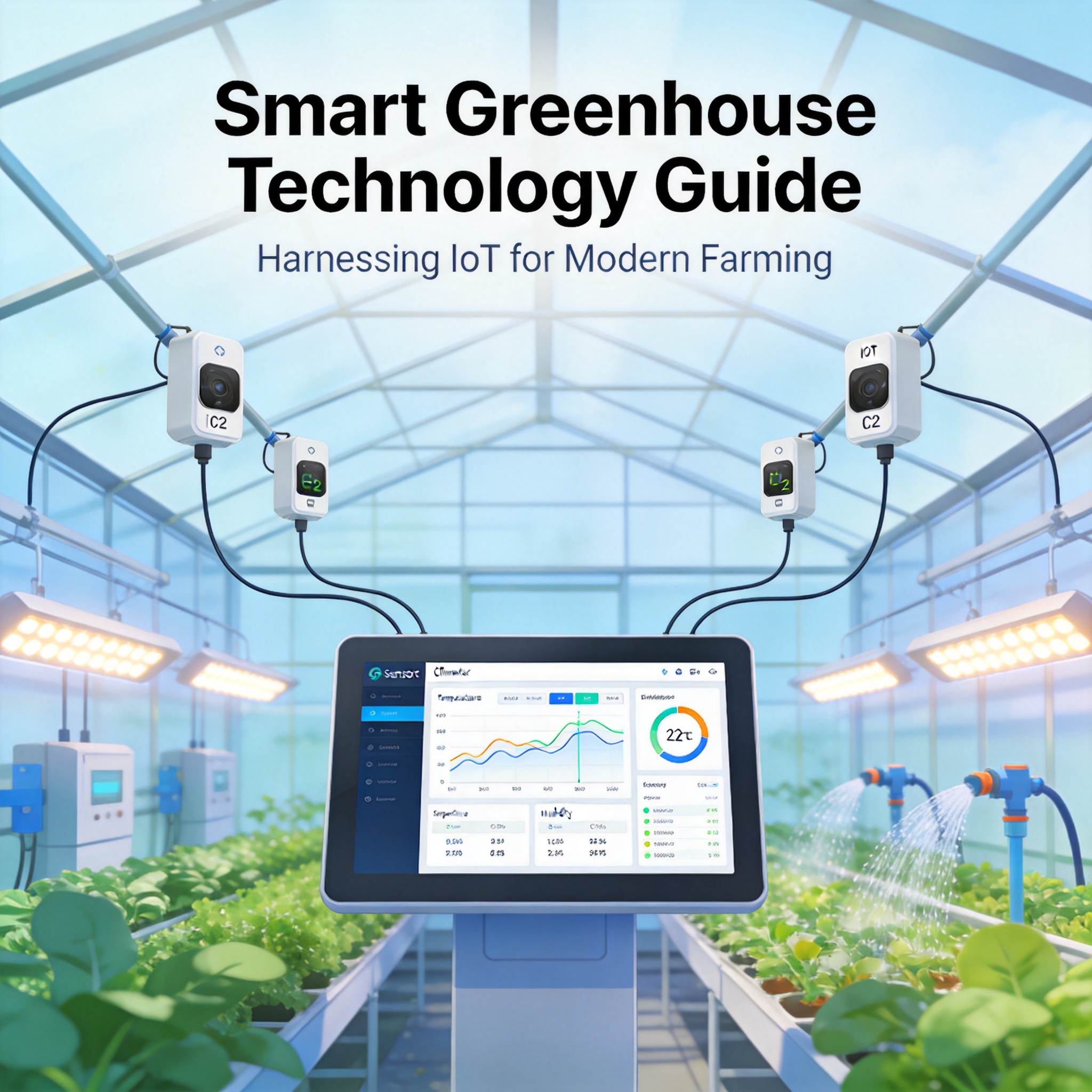
Plan greenhouse automation around crop needs, dependable measurements, coordinated controls, staff training and verifiable commissioning.
A smart greenhouse is useful when information leads to timely action. Sensors, controllers and remote dashboards can support that process, but the presence of connected equipment does not prove that the farm is well managed. The starting point should be the production plan: what the farm intends to grow, who will operate it and which decisions need support. From there, automation can be introduced in a way that fits the site and the team's capabilities. The objective is reliable daily production, with technology helping people notice and respond to change.
Write the operating brief before buying equipment
Define crop, growing area, production cycle, market expectations and available labour. Describe water, electricity, communications and local service limitations. Then identify the decisions that currently create difficulty: maintaining night conditions, matching irrigation to demand or detecting a stopped pump, for example. A clear brief makes supplier proposals easier to compare. It also prevents a project from accumulating features without explaining who will use them. Each proposed function should have a practical purpose and an identifiable person responsible for its operation.
Build dependable measurement first
Temperature, humidity, light and root-zone measurements can support management when their accuracy and location are understood. Select instruments for the decisions they inform, rather than collecting every possible number. Specify representative positions, maintenance access and calibration procedures. Check whether equipment records a value locally, sends it to another controller or only displays it in a cloud application. These are different capabilities. The team should understand missing data, suspect readings and communication failures before relying on trends to make important production decisions.
Connect controls through clear operating rules
A greenhouse may contain several controllers that act on the same crop environment. Heating, vents, screens and irrigation need compatible instructions. Ask who defines priorities when commands conflict and how weather restrictions are applied. Document normal operation, transitions and manual intervention. Avoid assuming that devices integrate simply because both are described as smart. Review actual interfaces, supported functions and responsibility for configuration. Successful integration means the assembled installation follows an understandable sequence, with the grower able to explain why each action occurs.
Plan alarms around an actual response
An alarm has value only if someone receives it, understands it and can act. Decide which events require immediate attention and which can wait for routine review. Identify the responsible person, an alternative contact and the information needed to investigate. Test delivery under the communication arrangements that the farm will really use. Consider what happens when internet access is interrupted, and confirm which control functions continue locally. Separate an informational notification from a condition that threatens crop continuity so that urgent signals remain meaningful.
Specify data access and service arrangements
Ask where records are stored, how the farm exports them and what remains available if a subscription or service changes. Define access permissions for staff and external technicians, and remove accounts when their role ends. Keep configuration records and recovery information in an appropriate secure location. Remote access should support maintenance without leaving responsibility unclear. In procurement, identify the supplier of each important component and the party responsible for system-level faults. A dashboard is easier to value when the farm also understands the service behind it.
Commission with the people who will operate it
Acceptance should demonstrate the installed system rather than isolated devices. Check representative sensor positions, control sequences, alarm receipt and access to manual operation. Use safe test procedures agreed with the installer for fault scenarios. Record any unresolved limitation and assign a person to close it. Train the actual operators on normal work, checks and escalation, and leave usable instructions on site. A short demonstration is not enough if staff cannot repeat the procedure during a busy day or outside normal support hours.
Expand only after reviewing the first results
Begin with functions that address the most important operating constraints. Compare records with plant condition, marketable production, labour and resource use. A screen full of data does not establish a financial benefit. Keep a baseline where possible and note changes in crop or season that affect comparisons. Use the first operating period to improve procedures before adding complexity. Further automation is easier to justify when the team can explain the problem it solves and the support required to maintain it.
For a smart greenhouse discussion with AGRINOVIX, bring an operating brief, site information and a list of the decisions that need improvement. Request a proposal that links each function to a production task, with clear commissioning and support responsibilities. A successful smart greenhouse is an operating system understood by its people. Its intelligence is visible in reliable actions, useful records and better informed decisions throughout the crop cycle.