
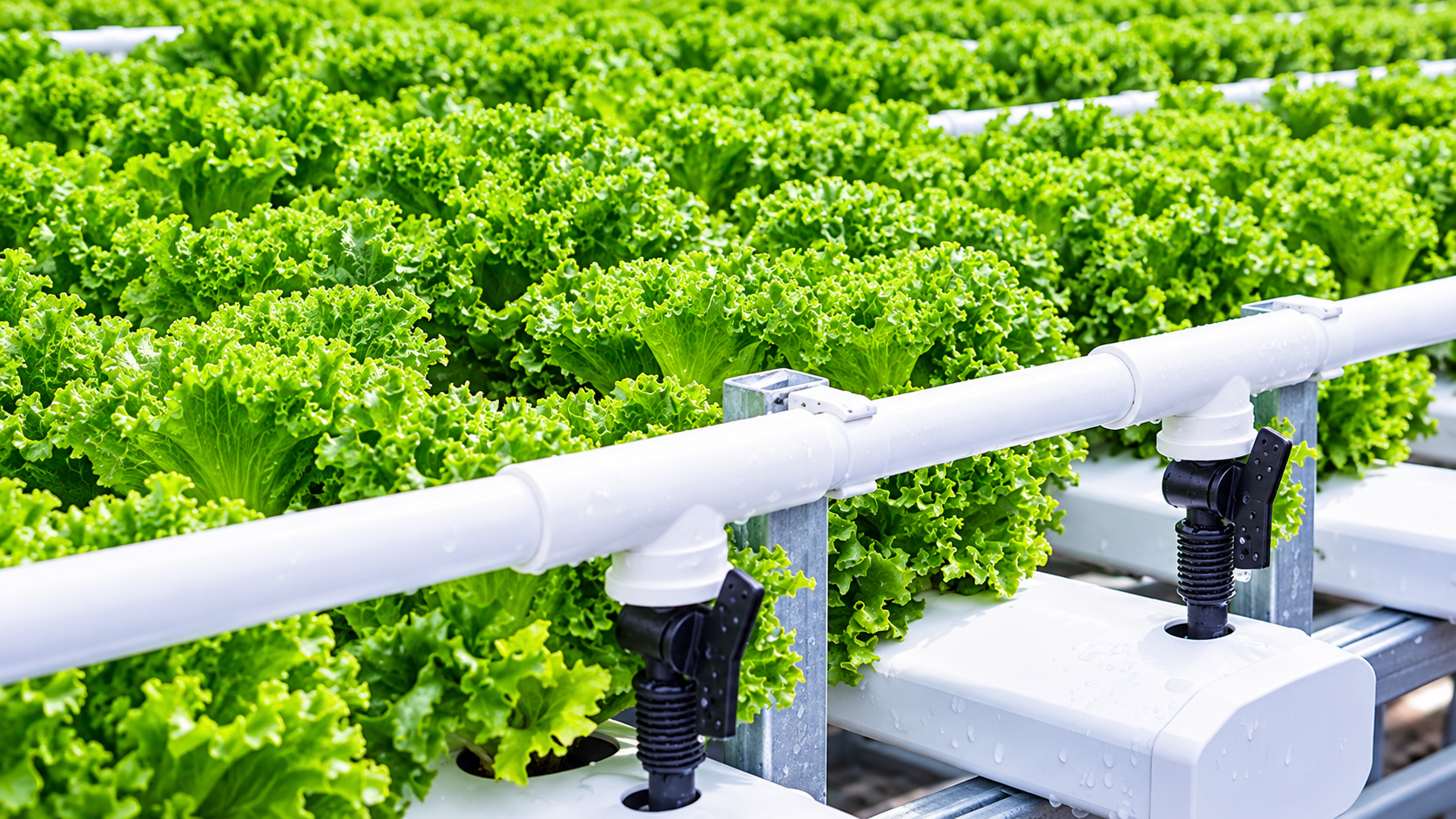
In modern greenhouse farming and soilless cultivation, EC and pH are two of the most frequently monitored parameters in nutrient management. They provide useful information about irrigation water and nutrient solutions, helping growers maintain more consistent conditions around the root zone. However, measuring EC and pH is only the beginning. The real value comes from connecting these measurements with irrigation scheduling, fertilizer dosing, water treatment and greenhouse environmental monitoring. An accurate reading alone cannot guarantee healthy crops. Growers also need to understand where the sample comes from, how the instrument is calibrated and how the results relate to actual crop conditions. At AGRINOVIX, we approach EC and pH management as part of an integrated greenhouse irrigation and fertigation solution. By combining water filtration, nutrient dosing equipment, sensors, automated irrigation controllers and IoT monitoring, growers can establish a more organized and measurable nutrient management process.
1. Understand What EC and pH Actually Tell You
Electrical conductivity (EC) indicates the ability of a solution to conduct electricity, which is influenced by the concentration and composition of dissolved ions. It is commonly used as an indicator of overall nutrient solution concentration.
However, EC cannot identify the individual nutrient balance. Two solutions with similar EC readings may have different concentrations of nitrogen, potassium, calcium and other elements.
pH measures the acidity or alkalinity of a solution. It influences nutrient chemistry and the availability of certain elements for plant uptake.
For greenhouse growers, both measurements are important, but they should be interpreted together with water quality reports, crop requirements and root-zone observations.
This is why a professional fertigation system should do more than simply inject fertilizer. It should provide growers with the ability to monitor and manage nutrient solution conditions throughout the production process.
AGRINOVIX fertigation solutions can be configured with EC and pH monitoring, nutrient dosing channels and automated control components according to the project's crop requirements and production scale.
2. Monitor Different Points Along the Water Pathway
A greenhouse irrigation system has several important measurement locations.
These may include the original water source, the filtration outlet, the nutrient mixing tank, the fertigation unit outlet, irrigation distribution lines and drainage collection points.
Each location provides different information.
For example, source water measurements help determine whether water treatment or adjustments to the nutrient recipe are necessary. Measurements after nutrient mixing help verify the prepared solution. Drainage measurements provide additional information about conditions within the growing system.
In substrate cultivation and hydroponic production, monitoring only the nutrient solution leaving the dosing unit may not provide a complete picture of root-zone conditions.
AGRINOVIX can incorporate monitoring points into the overall irrigation and fertigation design, helping growers establish a clearer understanding of water quality and nutrient distribution.
For larger commercial greenhouse projects, measurement locations can also be considered during the design of irrigation zones and monitoring networks.
3. Calibration Is Essential for Reliable Automated Control
Sensors are important components of an intelligent fertigation system, but their readings are only useful when the instruments are properly maintained.
EC and pH probes require appropriate calibration, cleaning, storage and periodic inspection according to the manufacturer's instructions.
Calibration records should include the date, reference solutions used and any problems encountered during the process.
This is particularly important when sensors are connected directly to automatic fertilizer dosing equipment.
If a pH sensor provides an incorrect reading, the controller may respond by adding too much or too little acid. Similarly, inaccurate EC measurements can affect fertilizer dosing decisions.
For this reason, AGRINOVIX system configurations should consider not only sensor selection but also calibration access, maintenance requirements, manual verification and appropriate control safeguards.
An automated system should make nutrient management more consistent, not create unnecessary risks when a sensor malfunctions.
4. Connect EC and pH Monitoring with Automatic Fertigation
One of the major advantages of modern fertigation technology is the ability to coordinate irrigation and nutrient dosing.
A typical greenhouse fertigation system may include water filtration, fertilizer stock tanks, dosing pumps, mixing equipment, EC and pH sensors, control valves and irrigation pipelines.
Depending on the project, the system can support multiple fertilizer channels, acid injection, automatic mixing and zone-based irrigation.
The operating process generally begins with water preparation and filtration. Fertilizer solutions are then injected and mixed according to the configured recipe. EC and pH measurements can be used to verify or regulate the prepared nutrient solution.
Once the solution meets the defined operating conditions, it can be distributed to the designated irrigation zones.
AGRINOVIX provides irrigation and fertigation configurations that can be adapted to different greenhouse sizes, crop types and cultivation methods.
For example, a commercial tomato greenhouse using substrate cultivation may require a different dosing arrangement from a leafy vegetable farm using NFT hydroponic channels.
The objective is to match the equipment configuration with the actual production process rather than applying one standard system to every farm.
5. Integrate Irrigation Data with Greenhouse IoT Monitoring
Modern greenhouse management increasingly depends on collecting information from different systems.
EC and pH are important, but they are only part of the picture.
Temperature, relative humidity, solar radiation, substrate moisture, irrigation pressure, water flow and drainage information can also help growers understand changes in crop conditions.
An integrated agricultural IoT platform can bring these measurements together through sensors, communication networks and centralized monitoring software.
Depending on the project configuration, AGRINOVIX greenhouse automation solutions can integrate irrigation controllers, environmental sensors and fertigation equipment into a coordinated monitoring system.
Operators can review important operating data, monitor system status and receive alerts when selected parameters move outside configured limits.
For large greenhouse projects, communication options such as RS485, Modbus, Ethernet and other suitable interfaces can be considered according to equipment compatibility and system architecture.
The benefit is not simply having more data. It is making information from irrigation, fertigation and climate control easier to review and use in daily farm management.
6. Interpret Measurements Alongside Crop Conditions
A change in EC or pH does not automatically mean that the fertilizer recipe needs to be changed.
For example, uneven crop growth may result from inconsistent irrigation distribution, blocked emitters, pressure differences or poor drainage rather than nutrient imbalance.
Before adjusting the entire fertigation programme, growers should inspect filters, pumps, pipelines, valves and irrigation emitters.
They should also compare feed solution measurements with representative drainage or root-zone measurements using consistent sampling methods.
In commercial greenhouse projects, irrigation zoning is particularly important. Dividing a large growing area into manageable zones can help improve water distribution and allow different crop areas to be managed according to their actual requirements.
AGRINOVIX irrigation solutions can be configured with filtration units, pressure regulation, distribution pipelines and automatic valves to support zone-based irrigation management.
When combined with appropriate sensors and monitoring equipment, these components provide a more complete approach to precision irrigation and nutrient management.
7. Choose the Right System for the Cultivation Method
Different cultivation systems require different approaches to water and nutrient management.
Substrate-based cultivation using coco coir or rockwool commonly relies on drip irrigation and carefully managed drainage.
NFT hydroponic systems require continuous or scheduled nutrient solution circulation, with particular attention to flow, oxygenation and nutrient solution stability.
Hydroponic tower systems have their own requirements for water distribution, circulation and nutrient delivery.
For this reason, EC and pH monitoring should be considered during the early design of the cultivation system.
AGRINOVIX offers different soilless cultivation and irrigation solutions, including substrate growing systems, NFT channels, hydroponic towers, drip irrigation and automated fertigation equipment.
These systems can be configured according to the crop, greenhouse layout, water source and production objectives.
For projects requiring centralized management, environmental monitoring and irrigation control can also be integrated into an IoT-based greenhouse management architecture.
8. Establish a Practical Monitoring and Maintenance Routine
Even an advanced automated greenhouse system needs regular inspection.
Operators should establish clear procedures for checking sensor accuracy, cleaning probes, inspecting filters, verifying dosing pumps and recording irrigation performance.
Alarm settings should also be based on crop requirements and actual operating conditions. Each alarm should have a defined verification and response procedure.
For commercial farms, maintenance access and local technical support should be considered when selecting equipment.
A system that is easy to inspect and maintain can be more valuable over its operating life than one that offers many functions but is difficult to manage.
At AGRINOVIX, we believe that irrigation and fertigation equipment should be evaluated as part of the complete greenhouse production system, including installation, operation, monitoring and future maintenance.
Conclusion: From Individual Measurements to Integrated Nutrient Management
EC and pH measurements provide important information for greenhouse nutrient management, but their value increases when they are connected with irrigation control, fertilizer dosing, water treatment and environmental monitoring.
A well-designed fertigation system helps growers manage nutrient preparation and delivery more consistently. An integrated IoT platform can make operating information easier to monitor and interpret.
Whether the project involves a small hydroponic farm, a substrate-based vegetable greenhouse or a large commercial agricultural facility, the system should be designed around the crop and the actual production requirements.
At AGRINOVIX, we focus on connecting greenhouse structures, hydroponic cultivation systems, irrigation and fertigation equipment, and intelligent environmental monitoring into practical agricultural solutions.
Because precision agriculture is not simply about measuring more parameters. It is about connecting the right equipment, reliable data and effective crop management to make better production decisions.
#AGRINOVIX #GreenhouseTechnology #CommercialGreenhouse #FertigationSystem #ECMonitoring #pHControl #Hydroponics #SmartIrrigation #GreenhouseAutomation #AgriculturalIoT #PrecisionAgriculture #SmartFarming