Product Details
01. NFT Channels for Managed Leafy-Crop Production
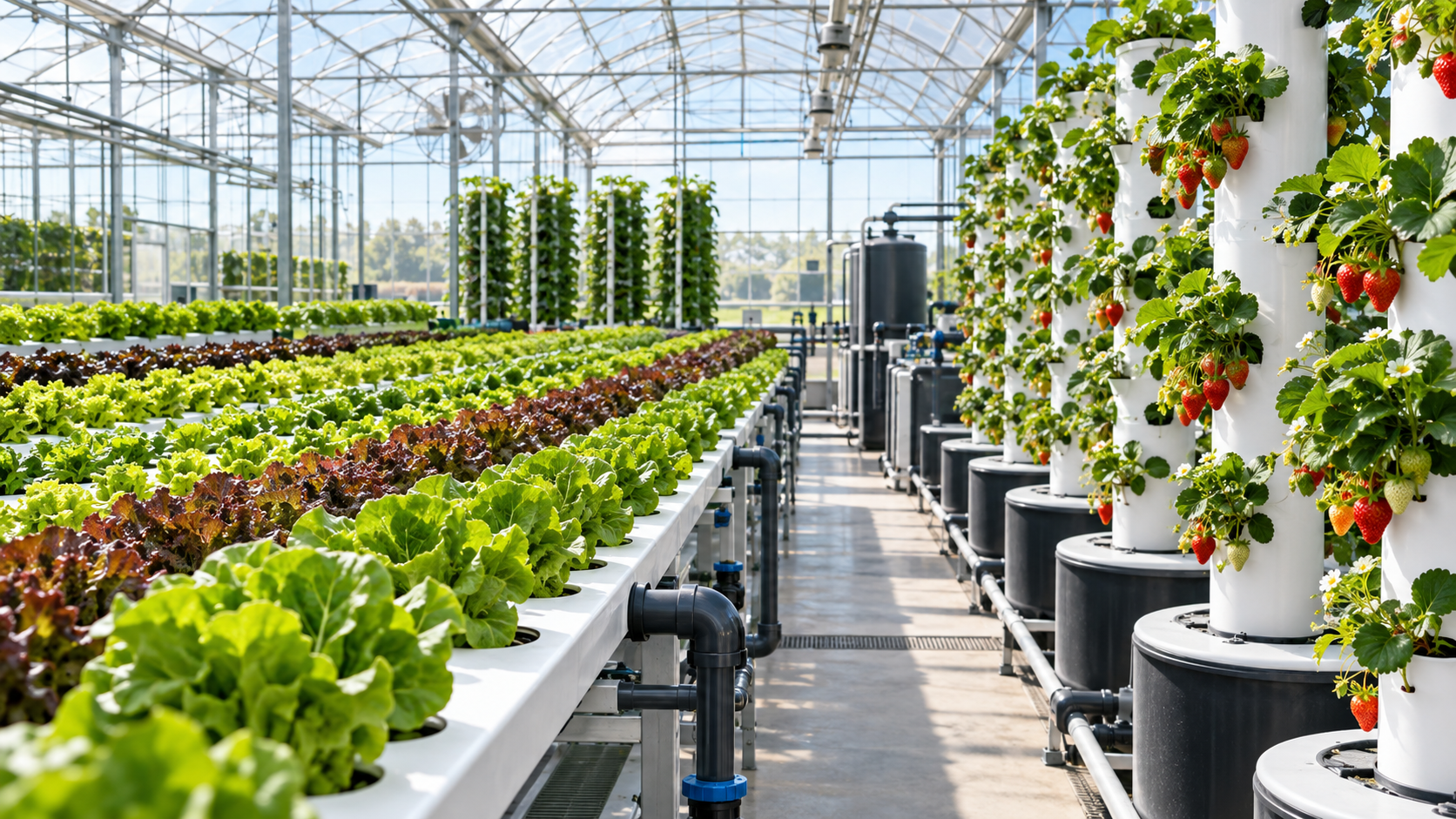
A nutrient film technique system circulates nutrient solution through growing channels containing supported plants. It is a production method to evaluate for suitable leafy crops and herbs, rather than a substitute for crop management. The proposed channel arrangement must accommodate mature roots, harvest access and the intended production schedule.
Commercial buyers should begin with crop trials, market requirements and the skills available on site. A layout that holds many plants is not necessarily the easiest layout to operate. Compare usable growing positions with the space required for inspection, cleaning, plant movement and dependable access to service equipment.
02. A Flow Path That Remains Accessible
The working circuit connects solution storage, pumping, distribution, growing channels and return drainage. Each connection needs a defined purpose and an accessible inspection point. During design review, trace the route from the reservoir to the most distant channel and back, including any points where debris can accumulate.
Channel supports and installation levels influence drainage. Check the completed layout with water before introducing plants, then reassess it as roots develop. Ask the equipment supplier to explain how the selected geometry prevents unintended pooling and how operators can identify an uneven supply without dismantling the crop.
- Keep supply connections identifiable and reachable for inspection.
- Provide access to channel ends and return connections.
- Verify support alignment against the approved installation drawing.
03. Select Materials Around Cleaning and Use
Growing channels, lids, plant supports, pipes and reservoirs should be assessed as a connected system. Ask for documented material identification and suitability for the intended nutrient solution, cleaning method and exposure conditions. Appearance alone does not establish durability, chemical compatibility or suitability for contact with production water.
Removable components may simplify access, but they also introduce joints, handling work and storage requirements. Compare the proposed parts with the team's cleaning procedure. Request samples where practical, and examine edges, connections and surfaces that will be handled repeatedly during transplanting, harvesting and preparation for another crop.
- Confirm compatible fittings rather than assuming nominal sizes match.
- Assess access beneath lids and around plant openings.
- Record replacement-part identification before approving the purchase.
04. Define Capacity Through the Crop Layout
Channel length, spacing, support height and planting positions are configuration decisions, not universal specifications. Define them using the selected crop, mature plant size and working method. A preliminary drawing should show clearances as well as growing positions, so that operational access can be reviewed alongside the production target.
Pump selection requires the actual duty conditions, including elevation differences and losses through the connected equipment. Reservoir sizing also depends on the complete circuit and operating procedure. Request the design basis for these selections rather than comparing systems only by pump power, tank size or advertised planting capacity.
- Provide the cultivation-area dimensions and access constraints.
- Identify the crop, variety and proposed harvest method.
- Review supply and return arrangements before fixing equipment locations.
05. Manage the Root Environment and Interruptions
NFT exposes roots to a moving nutrient solution while preserving access to air within the channel. The intended condition must remain workable as plants grow. Solution temperature, root development and distribution deserve routine observation; a satisfactory reading at one location does not prove that every channel is operating correctly.
Loss of pumping or an obstructed supply can interrupt delivery to roots. Prepare a response plan for the actual installation, with responsibilities for checking alarms, locating faults and restoring operation. Do not assume a universal safe outage duration: crop condition and the surrounding environment affect the consequences of an interruption.
- Agree which operating conditions require an alarm.
- Check representative channels during routine inspections.
- Discuss backup arrangements and the practical response of available staff.
06. Build Water Monitoring into Daily Work
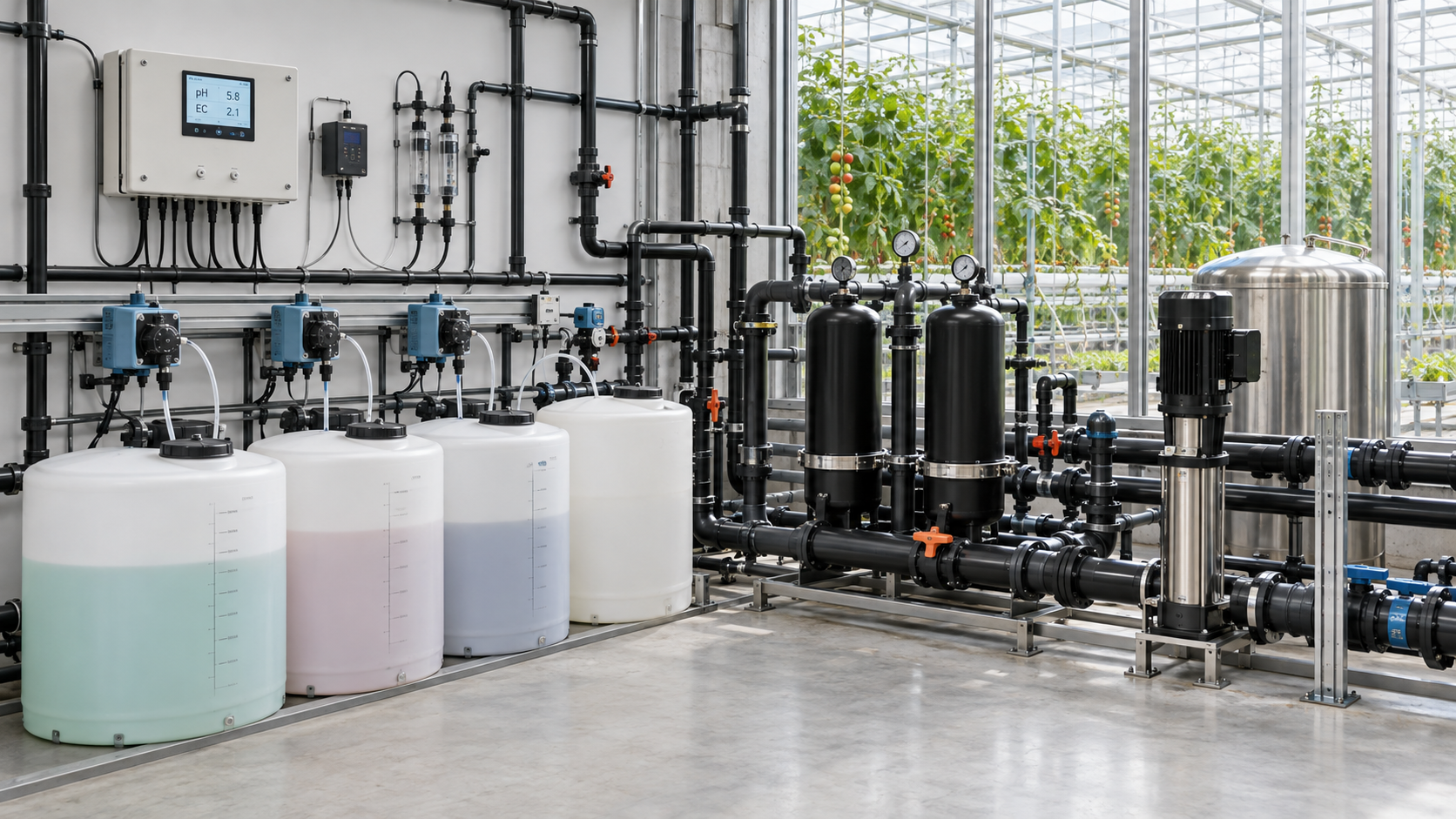
Water quality should be reviewed before choosing the nutrient-management approach. Electrical conductivity and pH provide useful operating information, but they do not identify every dissolved constituent. Establish suitable sampling and laboratory review with a crop adviser, and keep records that relate measurements to replenishment and plant observations.
Cleaning must cover channels, reservoirs, distribution fittings and return paths. Select procedures compatible with the materials and the farm's hygiene programme. Allow time between crops for inspection and preparation, and define how used solution and cleaning water will be handled within the site's applicable environmental requirements.
- Provide accessible sampling points and suitable measuring equipment.
- Follow instrument instructions for verification and calibration.
- Record cleaning completion before the next planting cycle.
07. Coordinate Controls and Installation Responsibilities
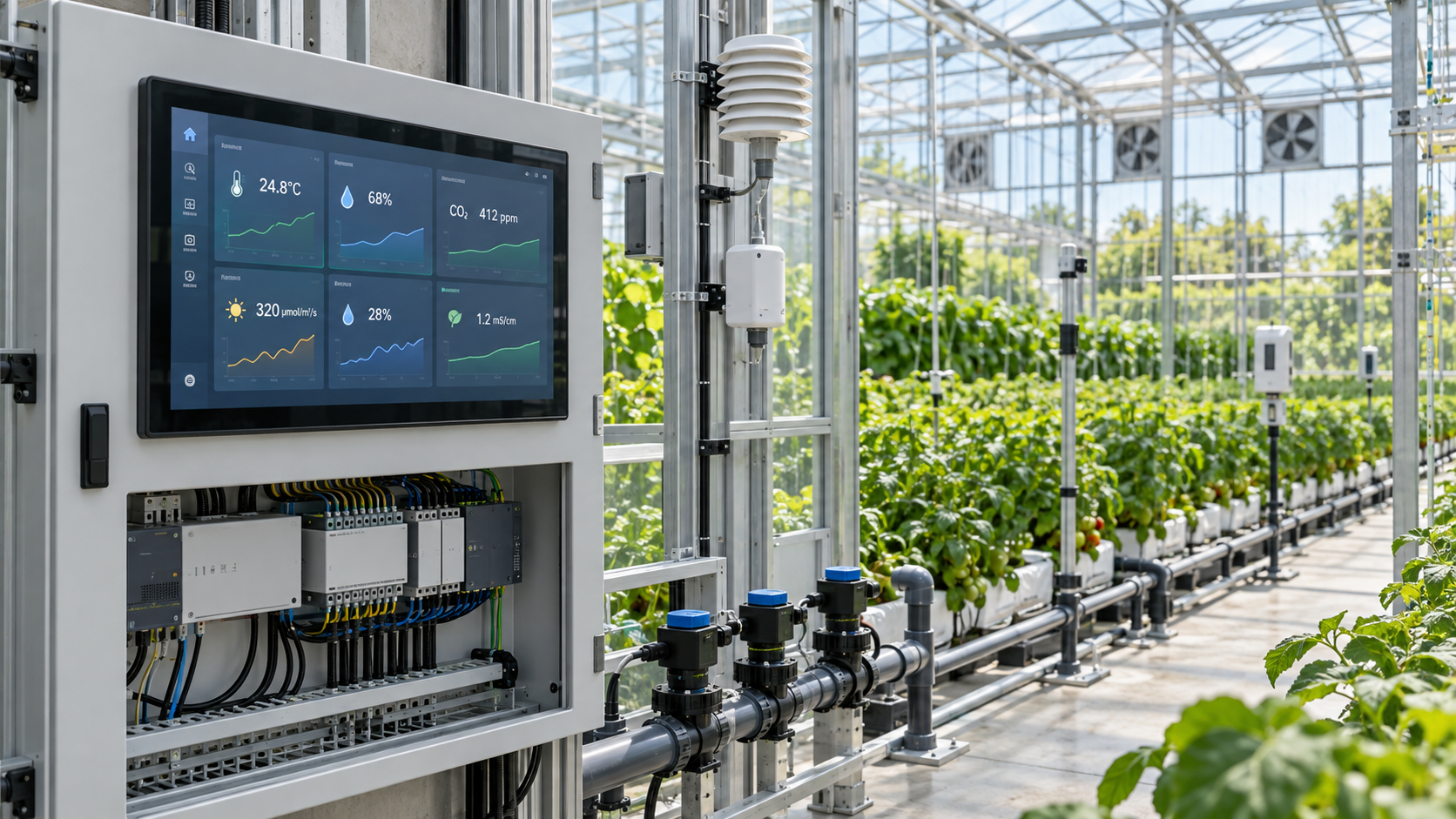
A proposed NFT installation may need interfaces with nutrient dosing, water treatment, environmental management and monitoring equipment. These interfaces should be described individually. Confirm who supplies sensors, connects power, configures alarms and tests the completed circuit; the presence of a controller does not establish compatibility with every external device.
Commissioning should demonstrate the assembled system rather than only individual components. Inspect supply and return operation across the cultivation area, review accessible isolation points and explain routine checks to the operating team. The agreed handover documents should identify the installed configuration and the responsibilities for later adjustments.
- Specify electrical and communication interfaces in the proposal.
- Separate included equipment from optional integration work.
- Agree a practical commissioning checklist before installation begins.
08. Prepare a Crop-Specific Project Enquiry
For an AGRINOVIX enquiry, provide the crop plan, growing-area drawing, water information and available utilities. Describe whether the project is a new installation or an addition to existing equipment. Include the working team's experience and the support expected during installation, startup and subsequent operation.
Use the resulting proposal to compare the complete operating arrangement, including access, controls, maintenance and supply boundaries. Confirm dimensions and component selections in the agreed project documentation. A useful specification explains how the installation will be managed; it does not rely solely on a photograph or a headline planting count.
- State the intended production cycle and harvest workflow.
- Identify local service and spare-part expectations.
- Confirm the final equipment schedule before placing an order.