Product Details
01. EC and pH Control Within a Nutrient-Management Programme
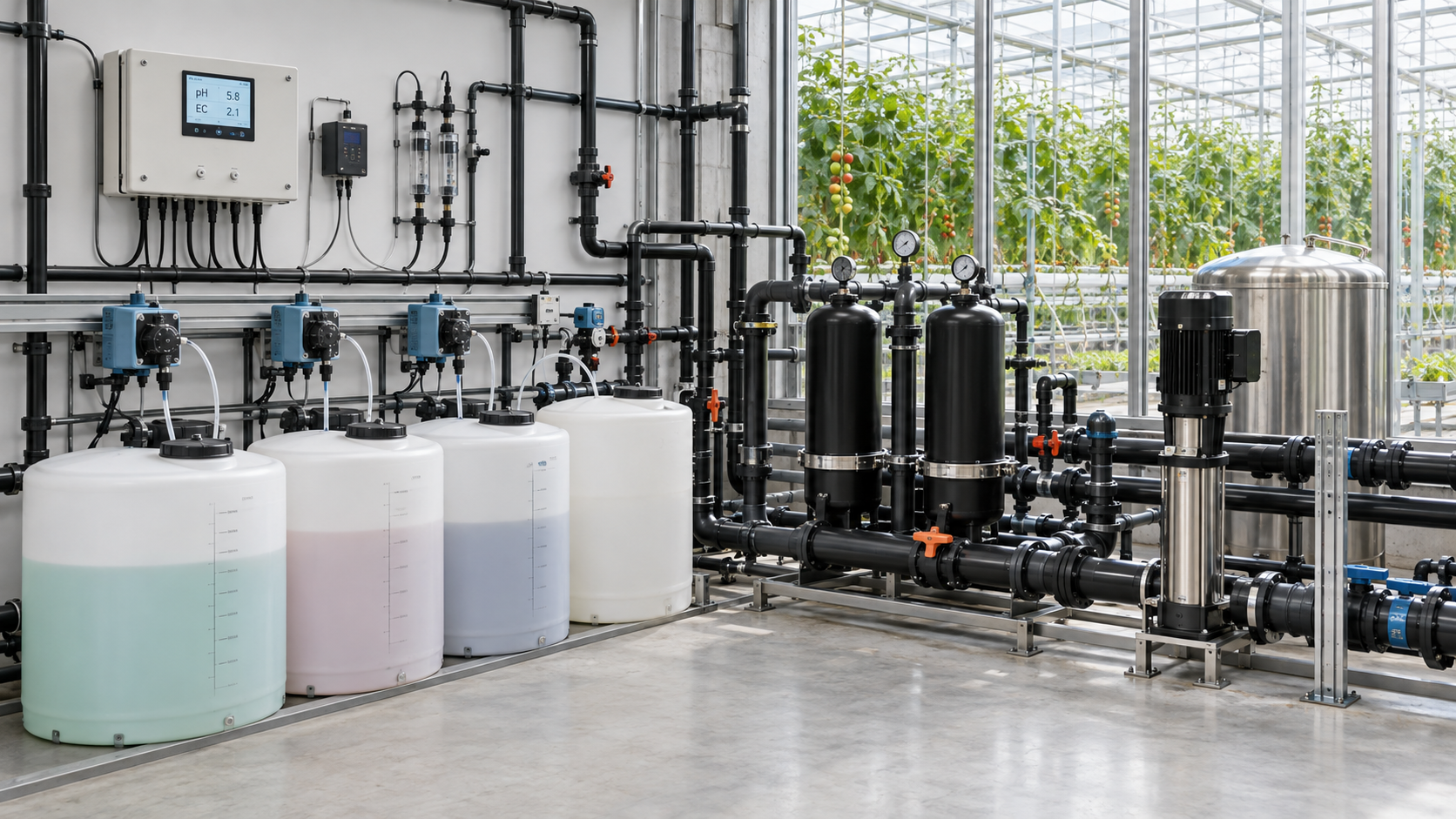
An EC and pH dosing system combines selected measurement and dosing equipment to support management of irrigation or nutrient solution. Electrical conductivity indicates overall ionic conductivity, while pH describes acidity or alkalinity. Neither measurement identifies every nutrient, so control targets must come from the crop programme and water assessment.
AgriNovix project planning should establish whether the equipment serves a storage tank, a recirculating system or a flowing irrigation supply. These arrangements create different mixing and response conditions. The proposed configuration should explain where measurements are taken, how dosing is applied and what remains an operator responsibility.
02. Place Sensors Where Readings Represent the Solution
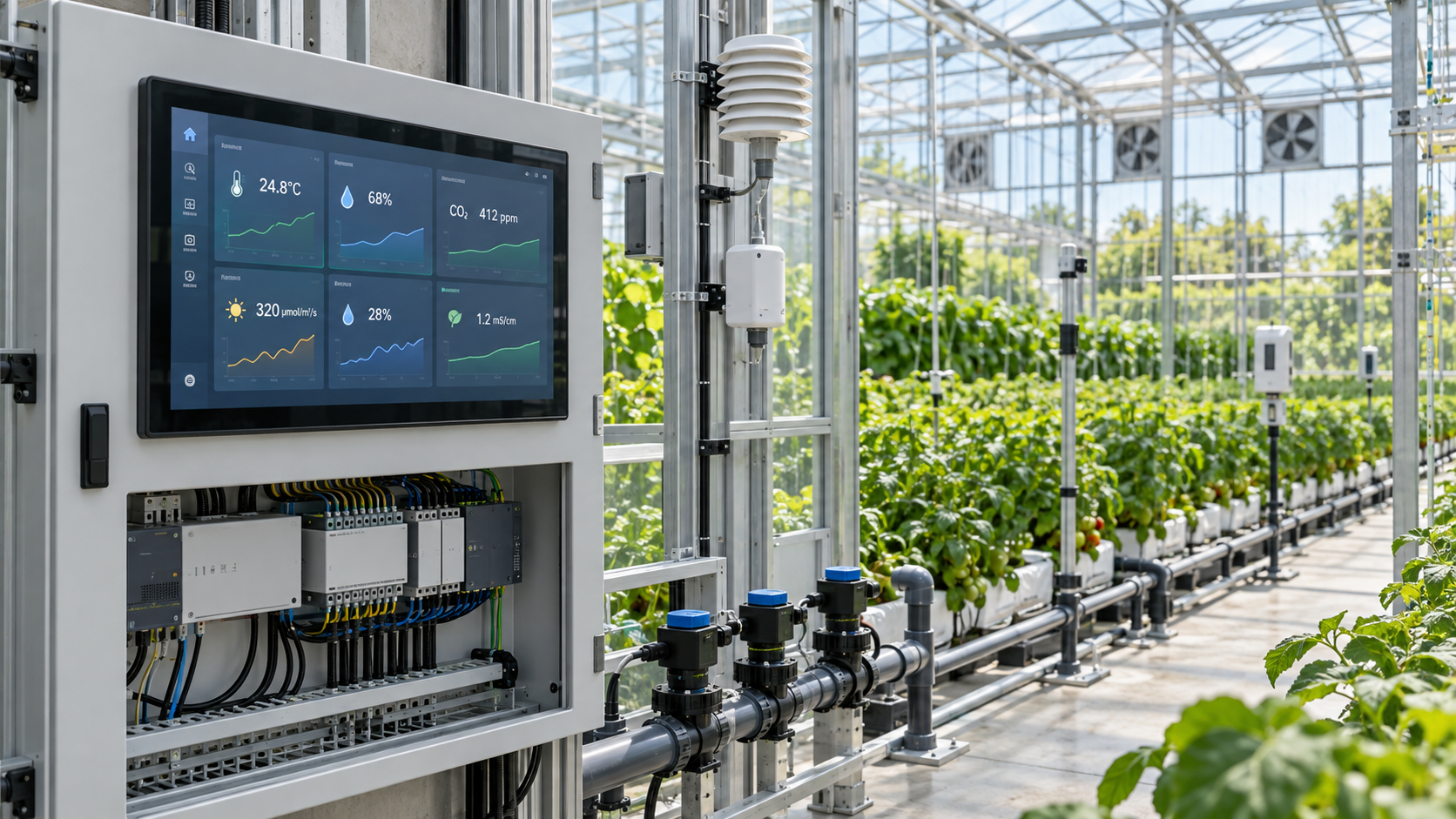
Measurement locations must allow the instruments to sample the solution relevant to the control objective. Position, flow conditions and mixing can affect the usefulness of a reading. Review the complete hydraulic arrangement so that a sensor does not merely detect an unrepresentative concentration close to an injection point.
Provide access for cleaning, calibration and replacement without unnecessary disturbance to the rest of the installation. The proposal should identify sensor type and installation requirements. Any temperature compensation or additional measurement functions should be confirmed in the supplied instrument documentation rather than assumed from the controller display.
- Define the solution condition each sensor is intended to represent.
- Coordinate measurement points with injection and mixing.
- Provide safe isolation and maintenance access.
- Confirm instrument functions and installation requirements.
03. Match Dosing Components to the Selected Materials
Dosing pumps or other injection devices must suit the intended solutions and operating conditions. Wetted materials, seals and tubing need a compatibility review using equipment and chemical documentation. Fertilizer concentrates and pH-adjustment materials should not be treated as interchangeable applications when selecting components.
Stock preparation and storage also require defined procedures. Identify separate concentrate streams, their labels and the connections used by operators. Appropriate professional guidance should establish compatibility and handling arrangements. Automatic dosing equipment does not remove the need to manage stock preparation and replenishment correctly.
- Identify all intended concentrates and treatment materials.
- Confirm compatibility of pumps, seals, tanks and tubing.
- Label storage and connections clearly.
- Define preparation and replenishment responsibilities.
04. Specify the Hydraulic Range and Mixing Arrangement
The system design needs actual flow, pressure and storage-volume information for the operating arrangement. A dosing configuration suitable for a stable tank process may not suit rapidly changing irrigation flows. Describe start-up, normal operation and shutdown conditions so that equipment selection reflects the complete cycle.
Mixing and measurement response influence control behaviour. The proposal should explain how newly injected material reaches the measurement point and how the control settings account for that process. Final dosing capacities and component ratings must be confirmed for the project rather than inferred from the number of growing positions.
- Provide minimum and maximum operating conditions.
- Describe tank, pipeline or recirculation arrangements.
- Identify changes caused by irrigation-zone operation.
- Request the basis for dosing and mixing equipment selection.
05. Define Control Limits and Fault Responses
The operator should understand which setpoints can be changed and how those changes affect dosing. Establish permitted settings through the crop-management programme and equipment instructions. Access levels, records and remote functions should be identified separately if they are part of the proposed control system.
Review the response to sensor faults, unavailable stock solution, interrupted water flow and other relevant failures. The equipment should behave according to an agreed control sequence that can be demonstrated during commissioning. An alarm display is only useful when staff know what action to take and who is responsible.
- Define adjustable settings and operator permissions.
- Agree the conditions that trigger alarms or dosing stops.
- Specify responses to unreliable measurement or interrupted flow.
- Document fault recovery and restart procedures.
06. Maintain Calibration and Independent Verification
Measurement instruments require cleaning and calibration according to their instructions. Use appropriate reference materials and record the procedure and results. A displayed value should not be treated as permanently reliable simply because the system is operating automatically or because a previous calibration was successful.
Independent checks of the delivered solution help verify the complete process, including measurement, dosing and mixing. Establish sampling points and compare results under representative operating conditions. Keep maintenance records linked to instrument identity so that changes in performance can be investigated and replacement decisions made with useful evidence.
- Follow the specified cleaning and calibration procedures.
- Use suitable reference solutions and verification instruments.
- Record instrument identity, results and adjustments.
- Check delivered solution during commissioning and routine operation.
07. Coordinate the Controller with Irrigation Equipment
The dosing system may need signals from pumps, valves or supervisory controls. Confirm electrical and communication compatibility before installation. Describe the meaning of each signal and the expected response, including what happens when communication is unavailable or another connected component is stopped for maintenance.
Commissioning should test the assembled arrangement through agreed operating sequences. Verify water movement, measurement response, dosing and fault handling without relying only on individual component tests. Training should use the installed configuration and include the checks staff must perform before allowing automatic operation.
- Define interfaces with pumps, valves and monitoring equipment.
- Identify who connects and tests each interface.
- Demonstrate agreed operating and fault sequences.
- Provide configuration records and operator instructions.
08. Prepare an EC and pH Dosing Enquiry
Provide AgriNovix with water analysis, the crop programme and a diagram of the existing or proposed irrigation system. Describe flow ranges, storage volumes and the intended dosing materials. Include current instruments and controllers if the new equipment must connect to an installation already in use.
The final proposal should identify measurement points, dosing components, controls and supply boundaries. Confirm ratings, compatibility and acceptance checks in project documents. A useful specification explains how the solution will be managed and verified, without treating EC and pH readings as a complete nutrient analysis.
- Describe crops, water source and nutrient-management objectives.
- Provide hydraulic and storage information.
- Identify dosing materials and existing control equipment.
- Confirm commissioning, calibration and service expectations.